
12 November 2026 - Tony Tyler
A good client has recommended you to a business they know. You have the initial meeting on Thursday and with the research in hand you’re thinking about what you’re going to say and ask at the meeting.
Without a plan, the meeting will drift, and you will fill the gap with your credentials: the history, the team, and the client list. All true but the buyer heard a pitch, and a buyer who hears a pitch in a first meeting starts to look at the clock.
A good first meeting has one clear objective and that is to earn the right to a second meeting. To achieve that objective, you need three or four strong discussion points about the buyer's business, each one about something that is changing for them and that they are likely to be thinking about already.
Neil Rackham's research for SPIN Selling showed what experienced salespeople know by instinct. In larger sales, the salespeople who do best ask questions that help the buyer explore a problem and what it means for them, rather than rushing to the answer. The buyer does more of the talking, and they convince themselves. This is what is taught on sales training courses and it works, providing you have the right questions ready to ask.
What then really differentiates you is to connect every discussion point to something your firm genuinely does well. The things that matter to this buyer, given what is changing for them. When that link is there, the buyer sees the relevance without you having to pitch it. When it isn't, you are back to the credentials.
What it looks like in practice
In our last article we followed Calden, a fictional insurance broker, preparing for a first meeting with Merrow, a chilled ready meals manufacturer. DealCraft™ did the research and sorted what mattered from what didn't. Here is the next step: turning that into a meeting structure and plan for Thursday.
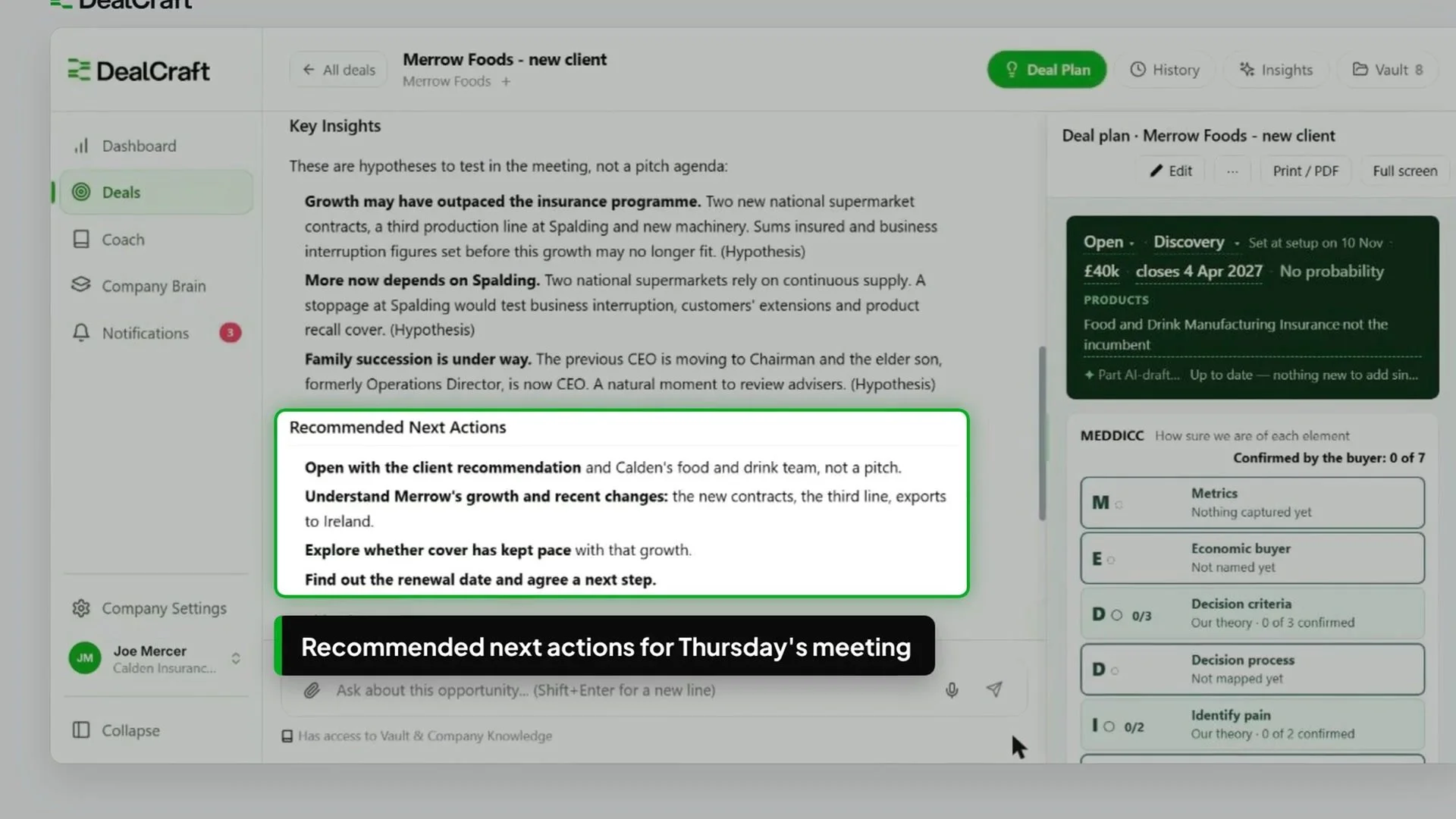
DealCraft pulls the research into a short summary. Its key insights are framed as "hypotheses” to test in the meeting, not a pitch agenda. Growth may have outpaced the insurance programme. More now depends on the Spalding factory. A family succession is a natural moment to review advisers. Then come the recommended next actions, starting with: “open with the client recommendation and Calden's food and drink team, not a pitch”.
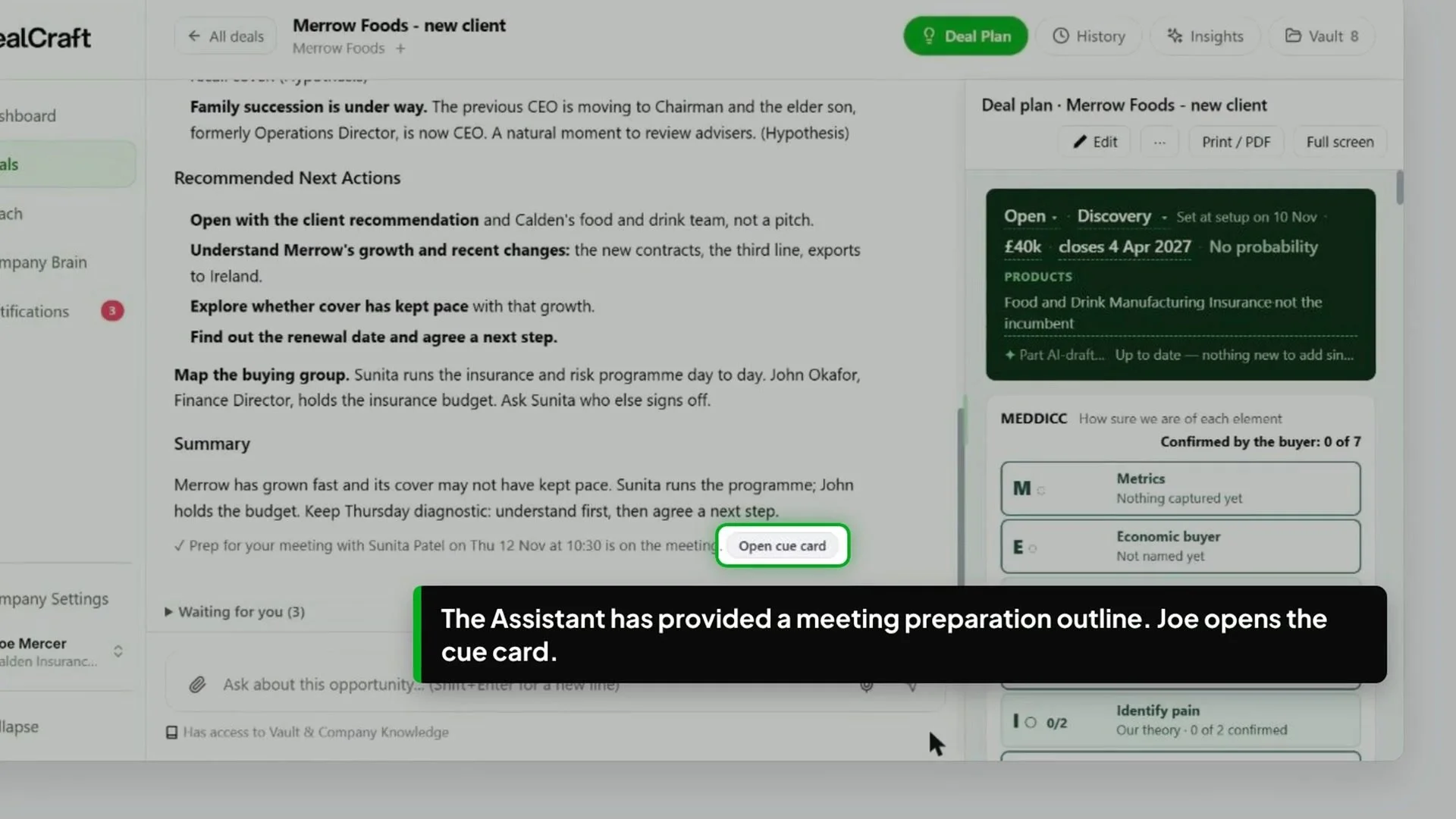
At the end of the summary, the prep for Thursday's meeting with Sunita Patel is ready.
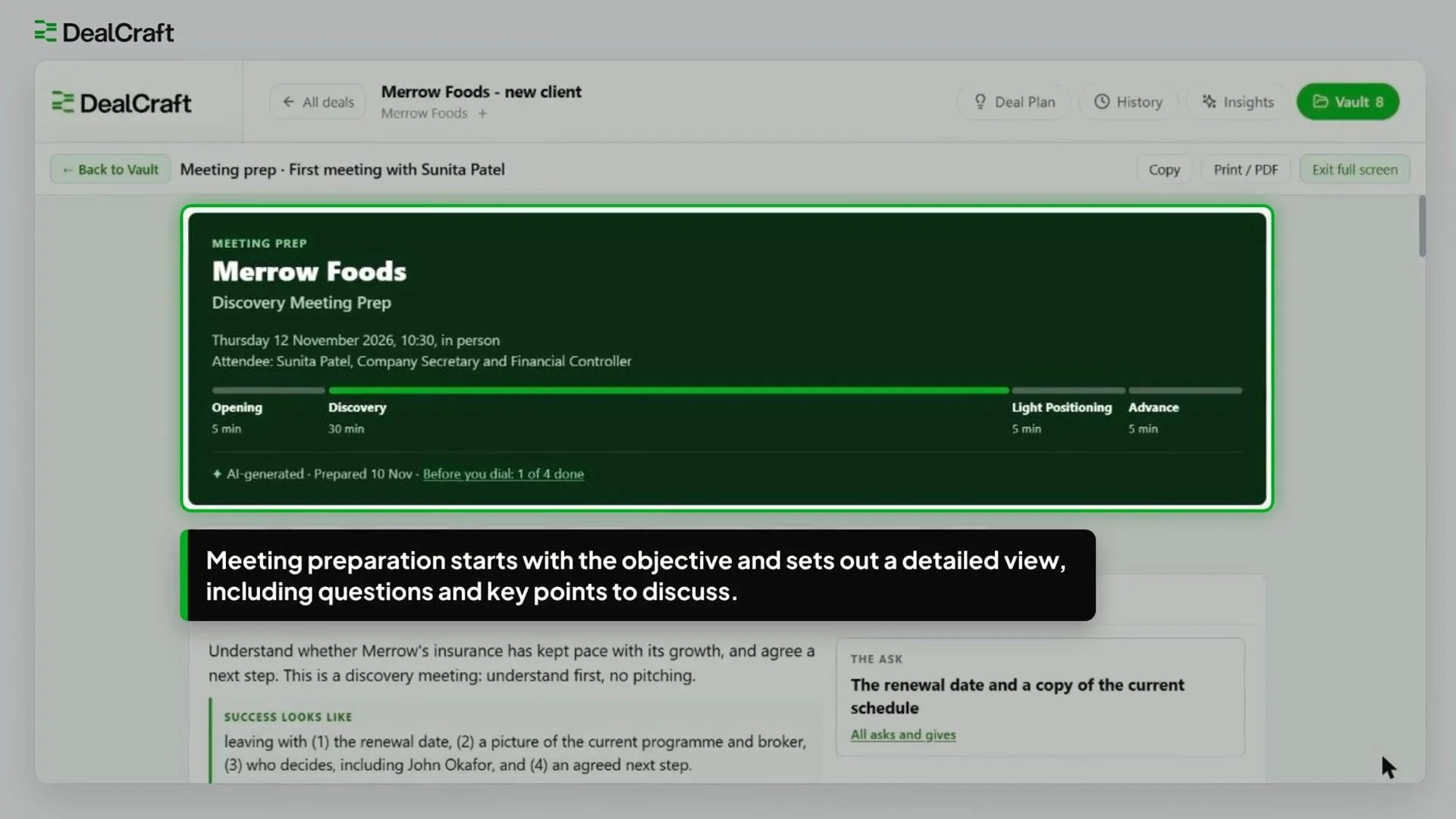
The meeting prep opens full screen. It has one objective: understand whether Merrow's insurance has kept pace with its growth and agree a next step.
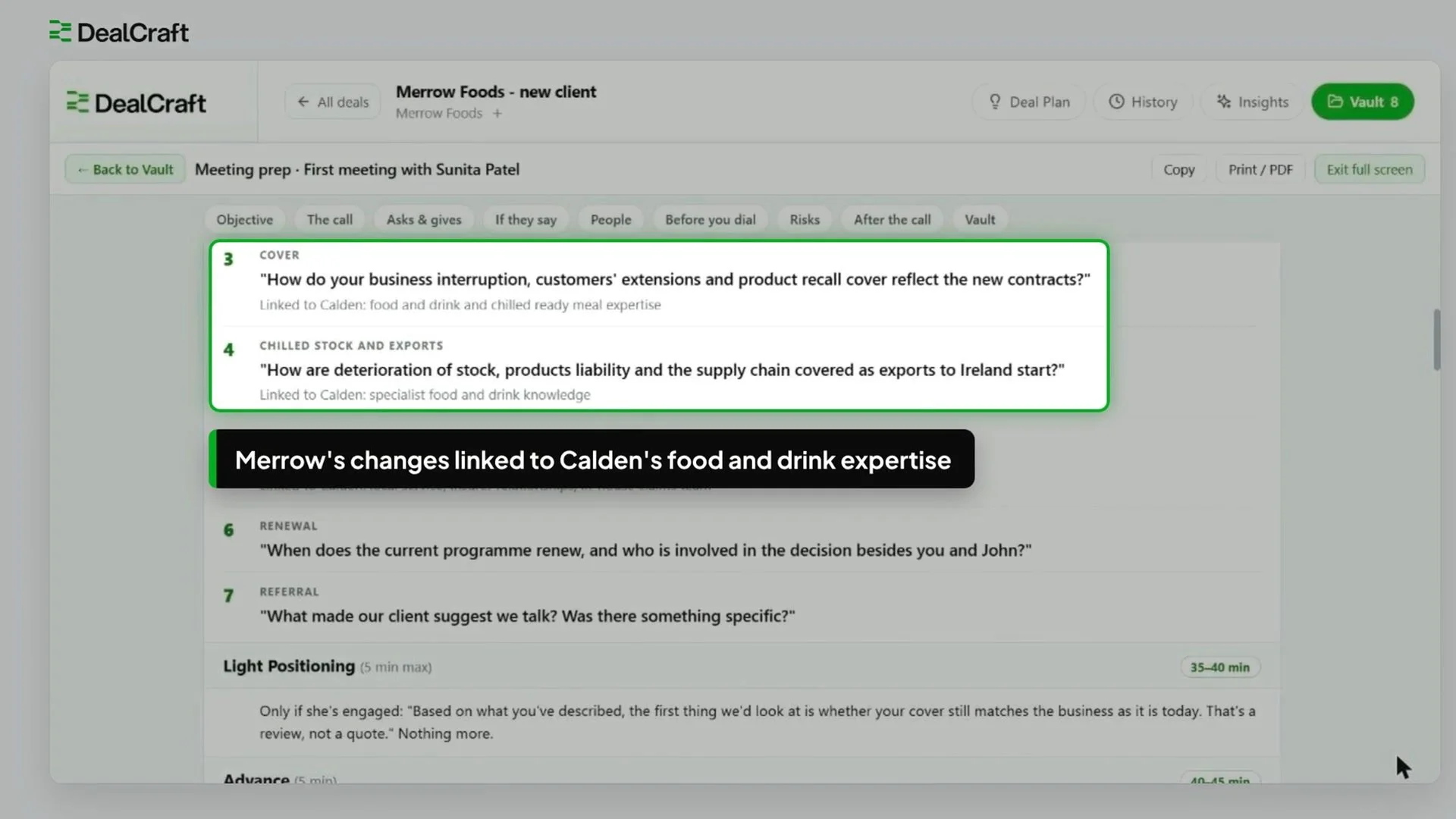
The conversation flow sets out the discovery questions that fill most of the hour, each one about Merrow's business.
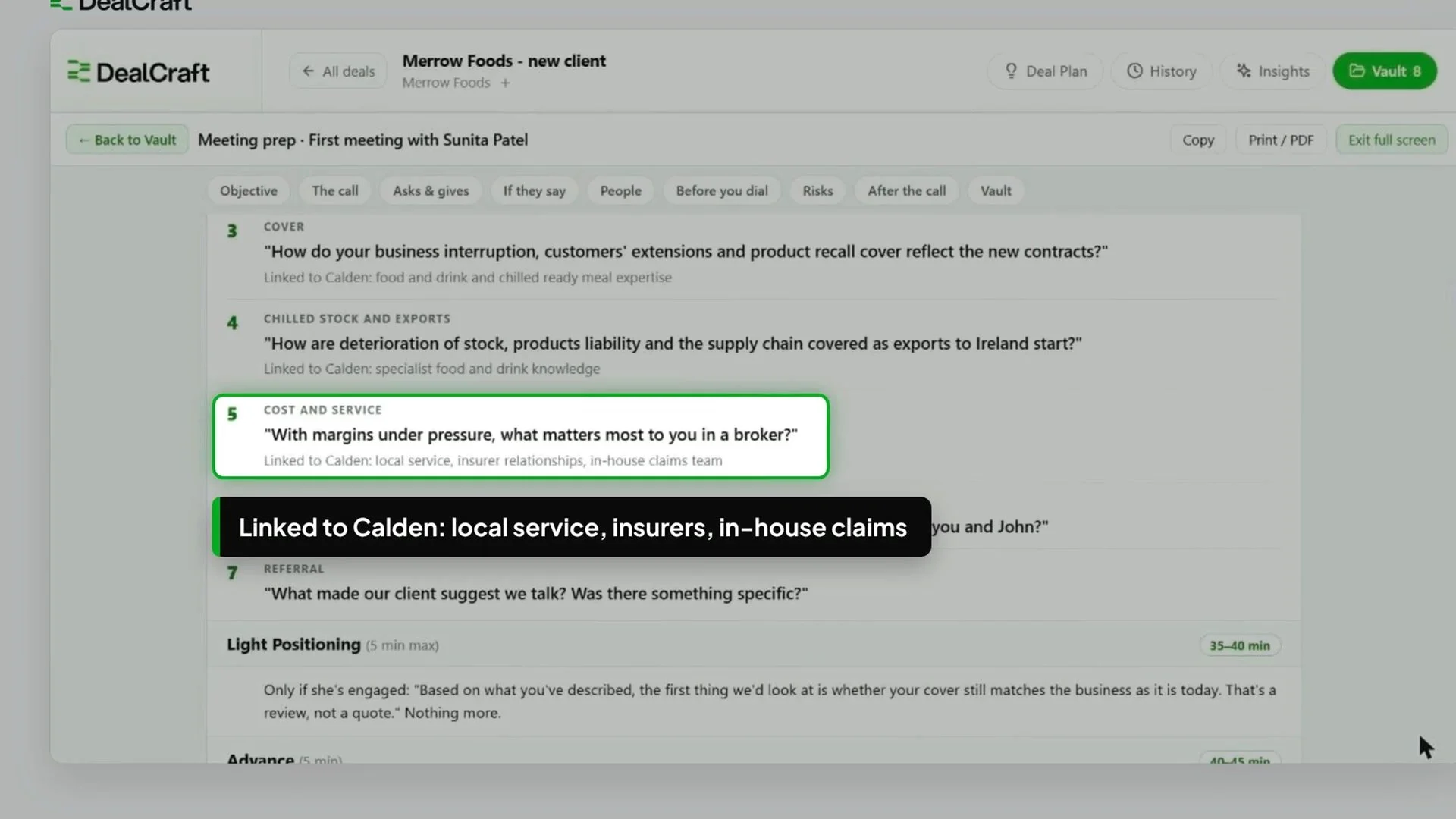
Each question shows where it links to Calden. Cover for the new supermarket contracts and exports to Ireland link to Calden's chilled ready meal expertise and general food and drink knowledge. "What matters most to you in a broker?" links to its local service, insurer relationships and in-house claims team. Positioning gets five minutes at most, and only if Sunita is engaged.
That is a meeting about Merrow, not about Calden. Yet Calden's strengths run all the way through it. The salesperson still owns the conversation. They read the plan, change what they would do differently and decide how to run the hour. DealCraft gets them ready and gives them ideas and a structure.
The salesperson does the selling. They walk into the meeting sharper and ready for an exploratory discussion, not a pitch.
Related resources
Article - Getting prepared for that first meeting - DealCraft example
Sales Skills Library - Sales meeting preparation checklist