
10 November 2026 - Tony Tyler
You have a first meeting next week with a new prospect. You do what any decent salesperson does. You read the website and research them online. You pull the latest accounts. You look up the people you are meeting on LinkedIn.
A Business Development Executive told us recently that to do this research and planning properly takes them on average around two hours. What struck me was the amount of actual selling time that’s being taken up especially when you aggregate this over a month or whole year. Even if someone else does the research, they are unlikely to be able to analyse it and develop the meeting plan. It’s the same with generic AI tools; it still leaves the salesperson with a significant burden.
Quite often research fails to identify buying signals and triggers: a new contract, a new site, growth that is stretching people and processes or a new face in a key role. Each creates pressure, a reason to talk and, possibly, a catalyst for change.
The last step is the one most often skipped. Take what you have found and hold it against what your own firm genuinely does well. Where the two meet, you have an insight. An insight gives the buyer a reason to give you their time.
Good sales training has taught this for years, but the challenge is finding the time to do it properly for every meeting.
How it looks when DealCraft™ does it for you
This is one of the tasks that DealCraft does for you. Here is how it looks, using a fictional example. Calden is an insurance broker. Joe Mercer, one of its Development Executives, has a first meeting with Merrow Foods.
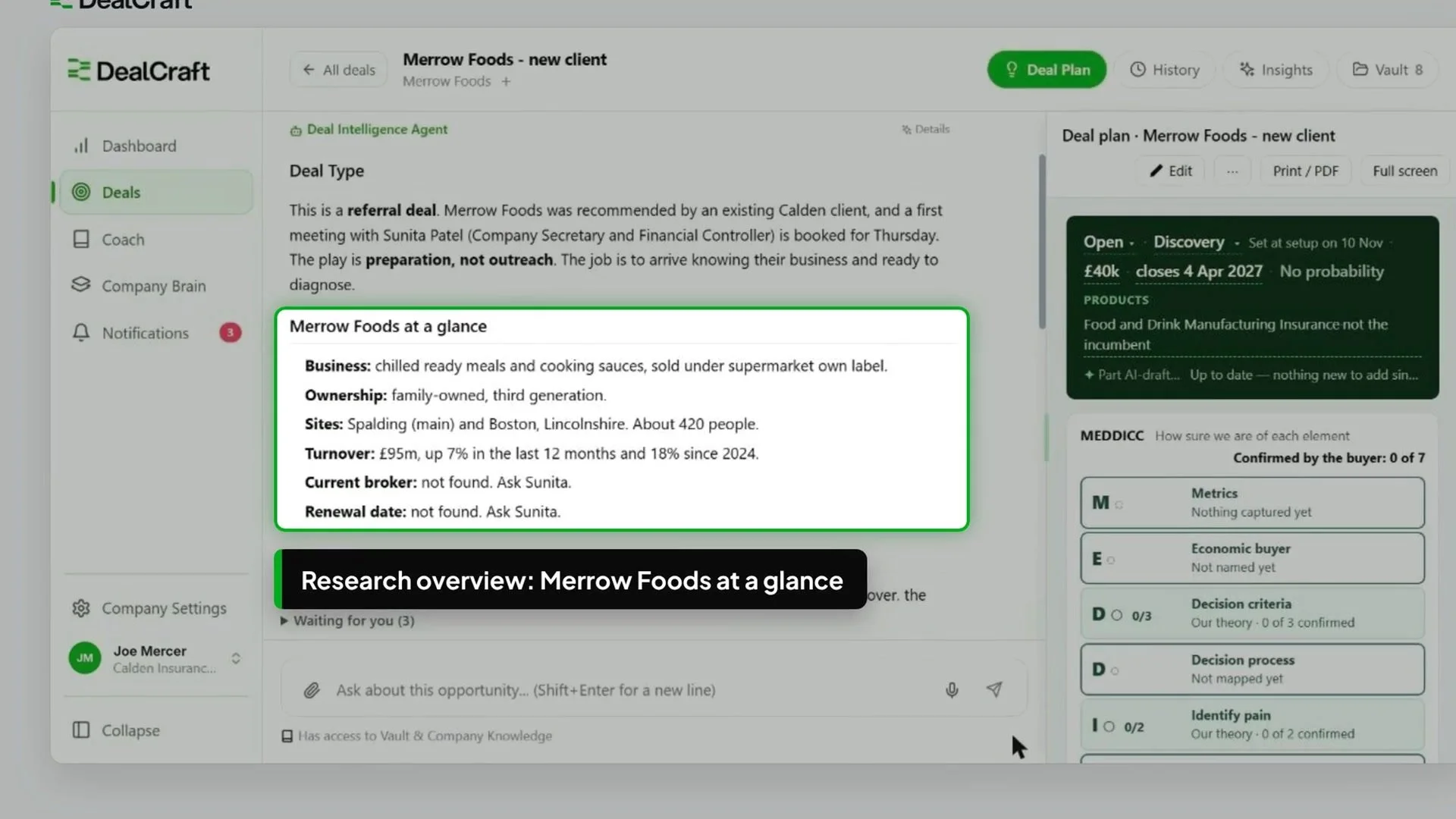
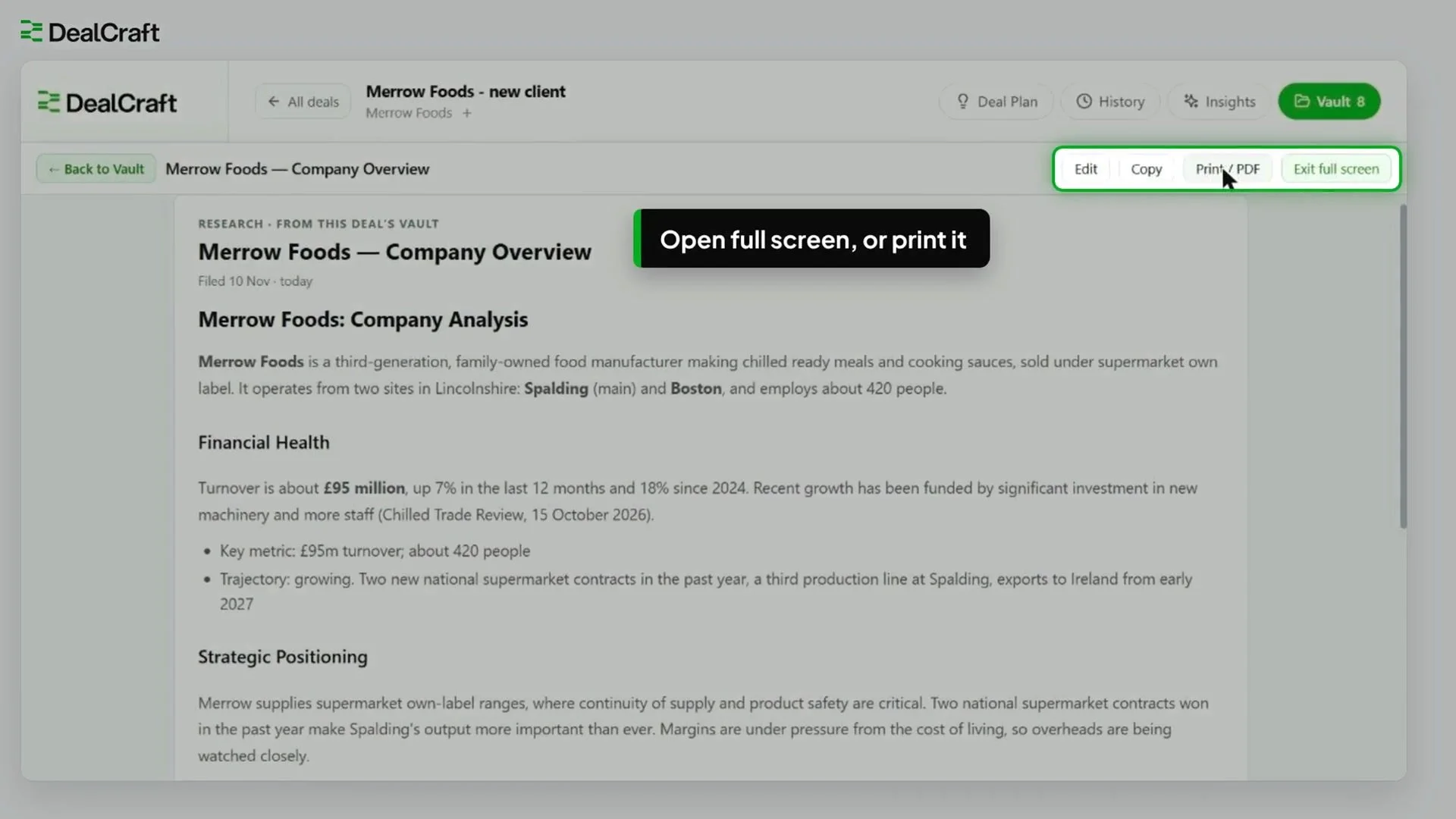
The Company Overview in the Vault starts with the basics. Merrow is a third-generation family business making chilled ready meals and cooking sauces for supermarket own label. It has two sites in Lincolnshire, at Spalding and Boston, and about 420 people. And it is growing. Useful, but on its own it is still a profile.
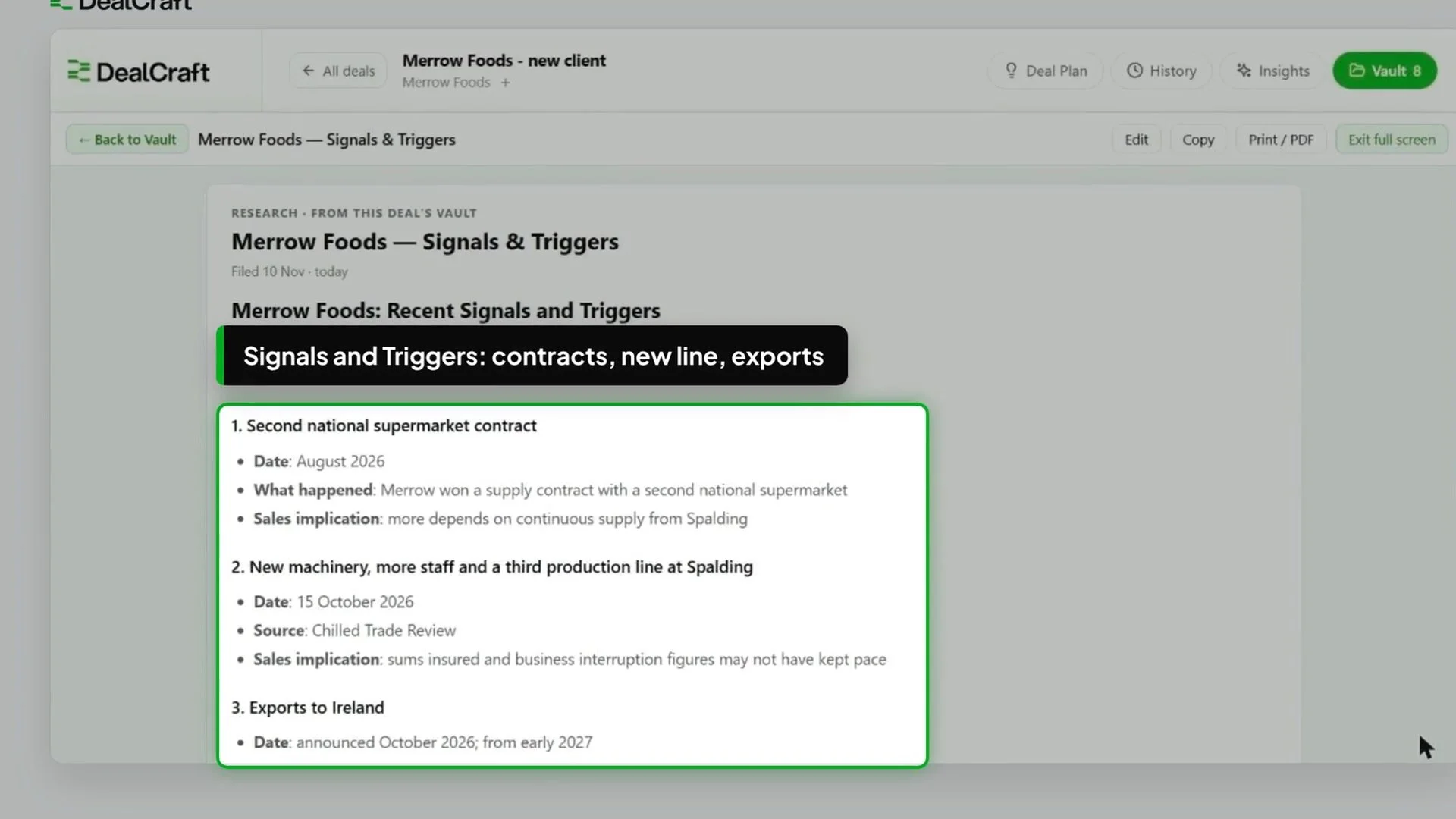
This is where it gets interesting. A second national supermarket contract. A third production line and new machinery at Spalding. Exports to Ireland from early 2027. A new chief executive, as the family hands on to the next generation. Each signal comes with a line on why it matters to Calden.
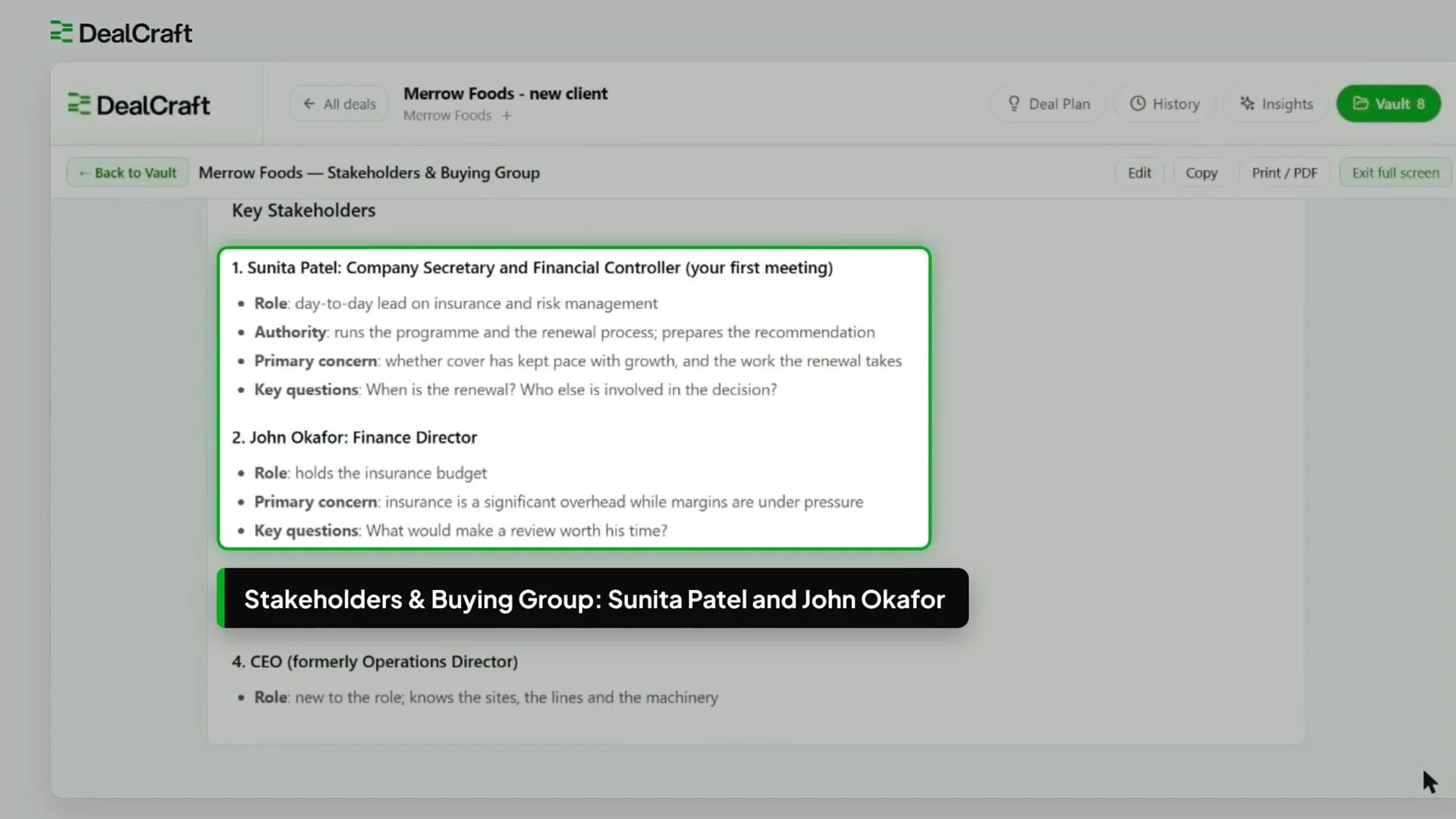
Sunita Patel, Company Secretary and Financial Controller, runs the insurance programme and the renewal. John Okafor, the Finance Director, holds the budget. The Chairman and the new chief executive are there too, with a note on the part each is likely to play. Four people, four different conversations.
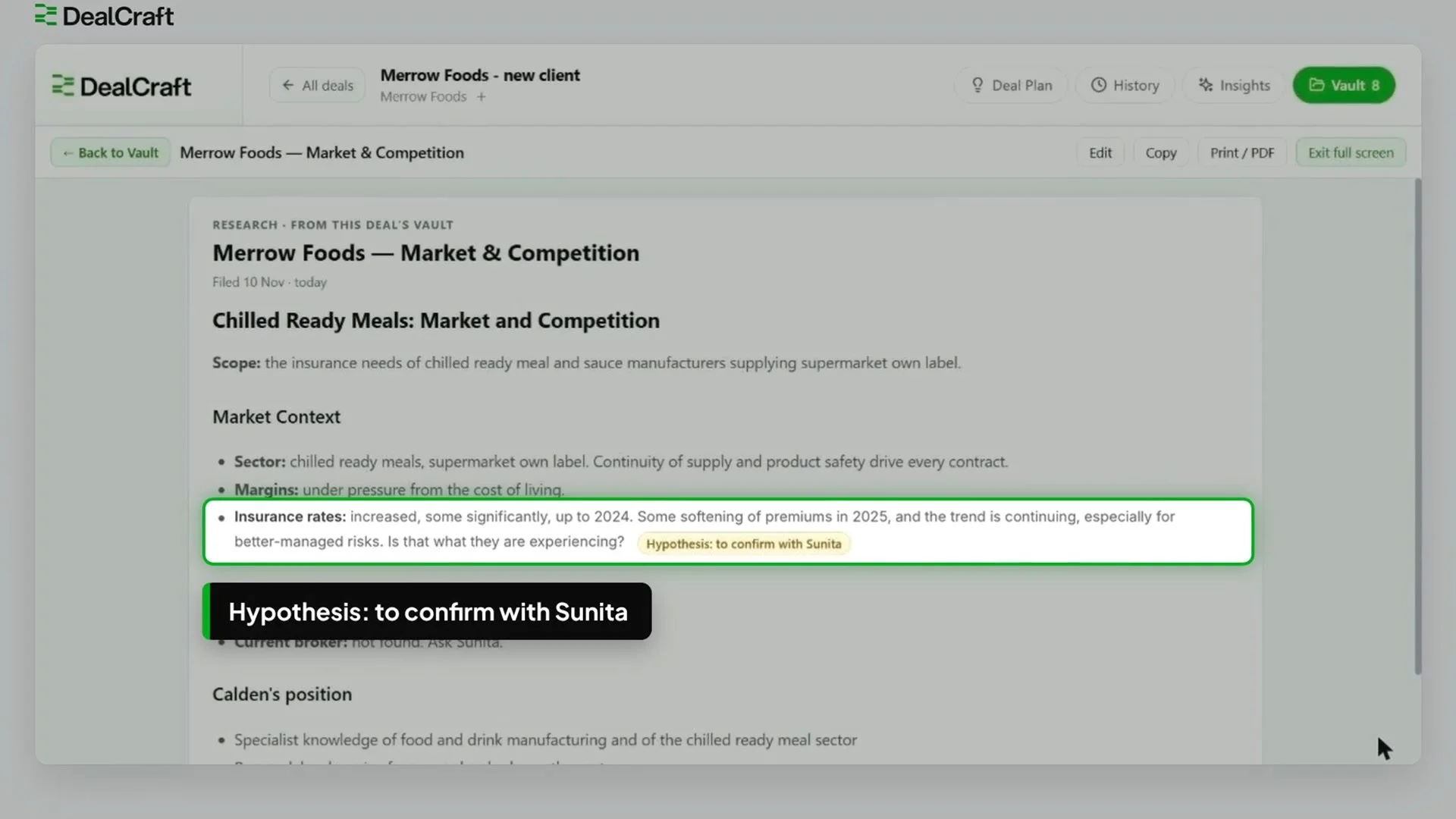
Market and Competition puts Merrow's changes in context. Supermarket contracts depend on continuity of supply and product safety. Margins are squeezed by the cost of living. I also like what it doesn't pretend to know. The idea that the insurance market has softened and that should be felt by Merrow Foods is tagged as a hypothesis to confirm with Sunita.
The important part is that DealCraft works from what Calden actually sells. It sets out where Calden fits: specialist food and drink knowledge and local service from people who know the sector. It sorts the signal from the noise for Calden, not for any broker. Joe reads it, questions it and decides what to take forward. Every report opens full screen and can be copied or printed, so it can sit on the desk like any good briefing note.
Knowing what matters makes a difference
The salesperson now knows what matters to Merrow and how that links to Calden’s strengths. That is a better starting point than most first meetings ever get.
What they don't have yet is a plan for the meeting itself. What to open with, what to ask, and how to earn a second meeting. That is the next step, and the subject of our next article.