
20 November 2026 - Tony Tyler
When I was a young Business Development Executive with Minet Insurance Brokers, I had the chance to pitch for Favor Parker, then a large food business headquartered in East Anglia.
On paper we had little right to be there. We didn’t have strong credentials in food manufacturing, and this was a significant business in that sector. The first stage was a conceptual review, with one broker from four to be chosen to quote against the incumbent broker. The others all had stronger credentials, so to have any chance of winning we had to stand out. It was suggested I take a look at Miller Heiman’s two books on strategic selling. That was my weekend arranged!
It really helped, and I used the Blue Sheet process to steer our sales plan. We spent hours visiting different client locations, getting under the skin of the group and understanding the challenges and requirements of each of its businesses. We understood what was on the minds of the people involved in the decision to appoint a broker.
We didn’t win, but the client invited us to lunch to tell us how close we came, how impressed they’d been and how we’d even helped their thinking. We were naturally disappointed, but it taught me something I’ve remembered ever since: a firm with fewer credentials can still lead the conversation if it has done the work.
If we’re honest, it’s difficult for buyers to tell most brokers apart. Most brokers’ propositions sound fairly similar, so clients’ decisions often come down to instinct and the chemistry with the team. Those decisions tend to be made early, in the meetings before any proposal is on the table. It turns on which broker understood the business, and which one helped the client see their risks and opportunities in a new way.
Buyers say the same. RAIN Group asked B2B buyers what separated the firm they chose from the one that came second. Top of the list: the winner brought them new ideas and perspectives. Every sales leader knows the Business Development Executives who already win this way. They arrive having done their homework, and the prospect can tell within minutes.
Making it stick
Later, running sales and bid management teams at Aon, I encouraged all my teams to sell like that. We were winning mid-market and large corporate accounts, and I was pleased to be part of management teams that invested in training. I believed in it then and I still do. My earliest sales course was a Forum Customer Focused Selling course, delivered by Keith Bronitt. It was fantastic. I still have the folder on a shelf next to my desk, and I carry the aide-memoire with me (see picture below).
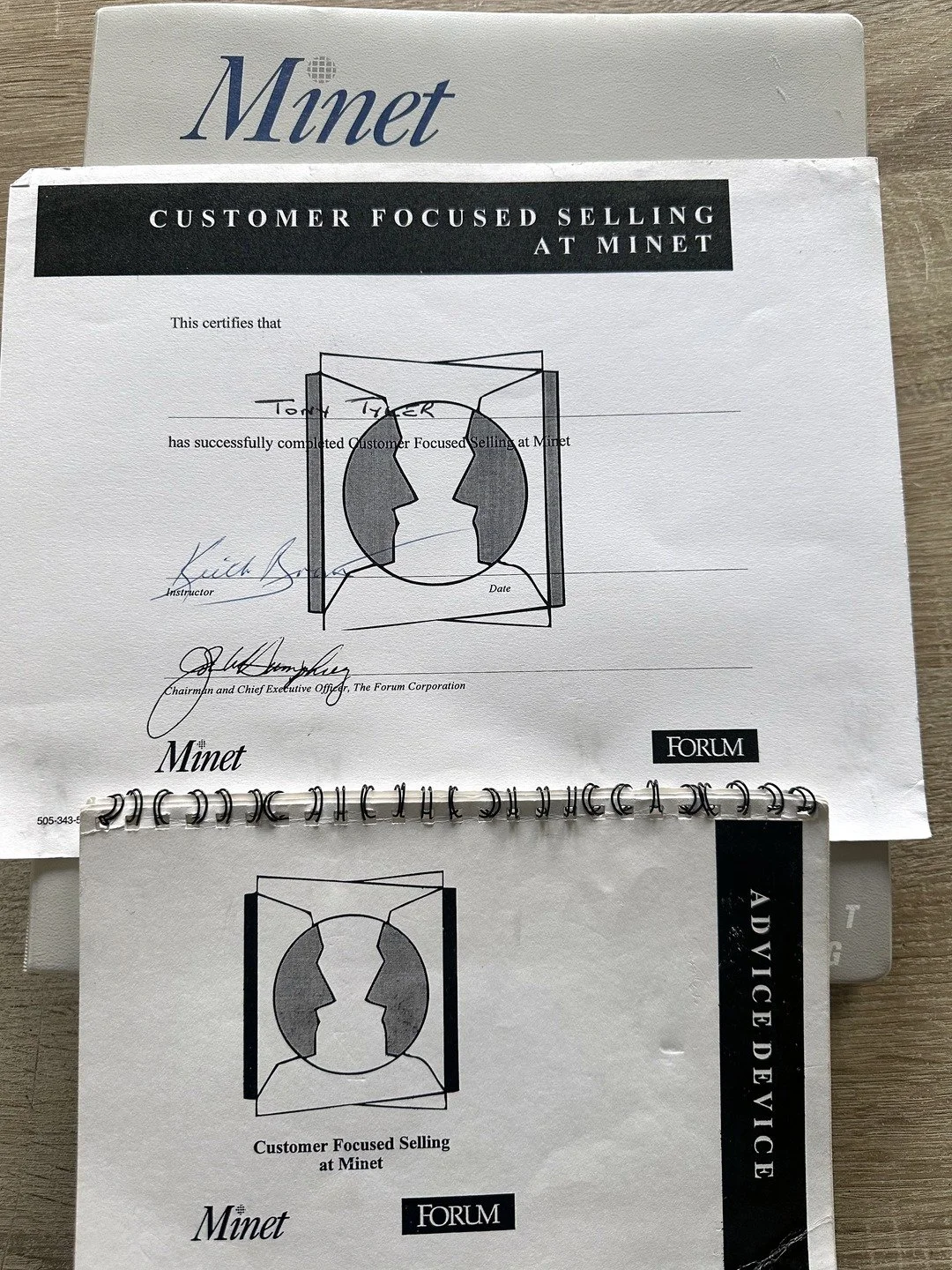
Making training stick across a whole team is harder. The people who prepare well improve their strike rate, and you can see it in the quality of their first meetings. But good preparation takes time, and that time comes out of selling time. When new business targets are pressing, preparation is the first thing to get squeezed. That isn’t a failing of the training or of the people. It’s the reality of a busy week.
So, at Aon we set up a sales support unit, with a research team at its heart. They did the basic research to take some of that burden away, so our Business Development Executives went into meetings better prepared. But back then there was far less information available. Today, the research, analysis and planning for a new client meeting can take two hours or more. There is so much to work through to find what matters and craft those “high-gain” questions.
It can be different
That’s the gap DealCraft™ was built to close. It’s an AI sales co-worker that does the support work my old team did, for every salesperson, on every opportunity. It researches the prospect, works out what is likely to matter to them and helps shape the conversation, grounded in proven sales methodologies. The salesperson still owns the meeting and makes the judgement calls. They just walk in prepared the way the best salespeople are.
Training will always be important, but the brokers who win more new business will be the ones whose salespeople walk into every first meeting having done the work, not simply the ones with the biggest brand names and best credentials behind them. If you lead a sales team in an insurance broking firm, look back at your last few new business wins. In most of them, I suspect, the client had made up their mind about you well before the proposal arrived.
If you’d like to see what that preparation looks like, there’s a 90-second example on our See It Work page https://www.dealcraft.ai/platform/use-cases/#firstmeeting